By Parinaz Khazaee
When I see an influencer promoting a product that seems completely unrelated to their usual content or experience, I start questioning the brand behind it. What made that person the right choice? Do they understand the product? Would they recommend it without the sponsorship?
For me, that disconnect can make the entire brand feel less trustworthy. The post may attract attention, but it gives me little reason to believe in what the company offers.
That is the challenge I want more brands to consider when planning their social media content: what will people believe about your business after they see it?
Likes, views, and follower counts provide useful feedback about visibility. Building trust requires looking further, at whether the content helps the right people understand the brand, evaluate its promises, and feel confident taking the next step. Five marketing voices offer practical perspectives on how to make that happen.
Give people a reason to return
A useful starting point is the audience’s everyday questions. Someone visiting a brand’s page should be able to understand what it offers, who it serves, and how it can help. Content that answers those questions gives people a reason to return.
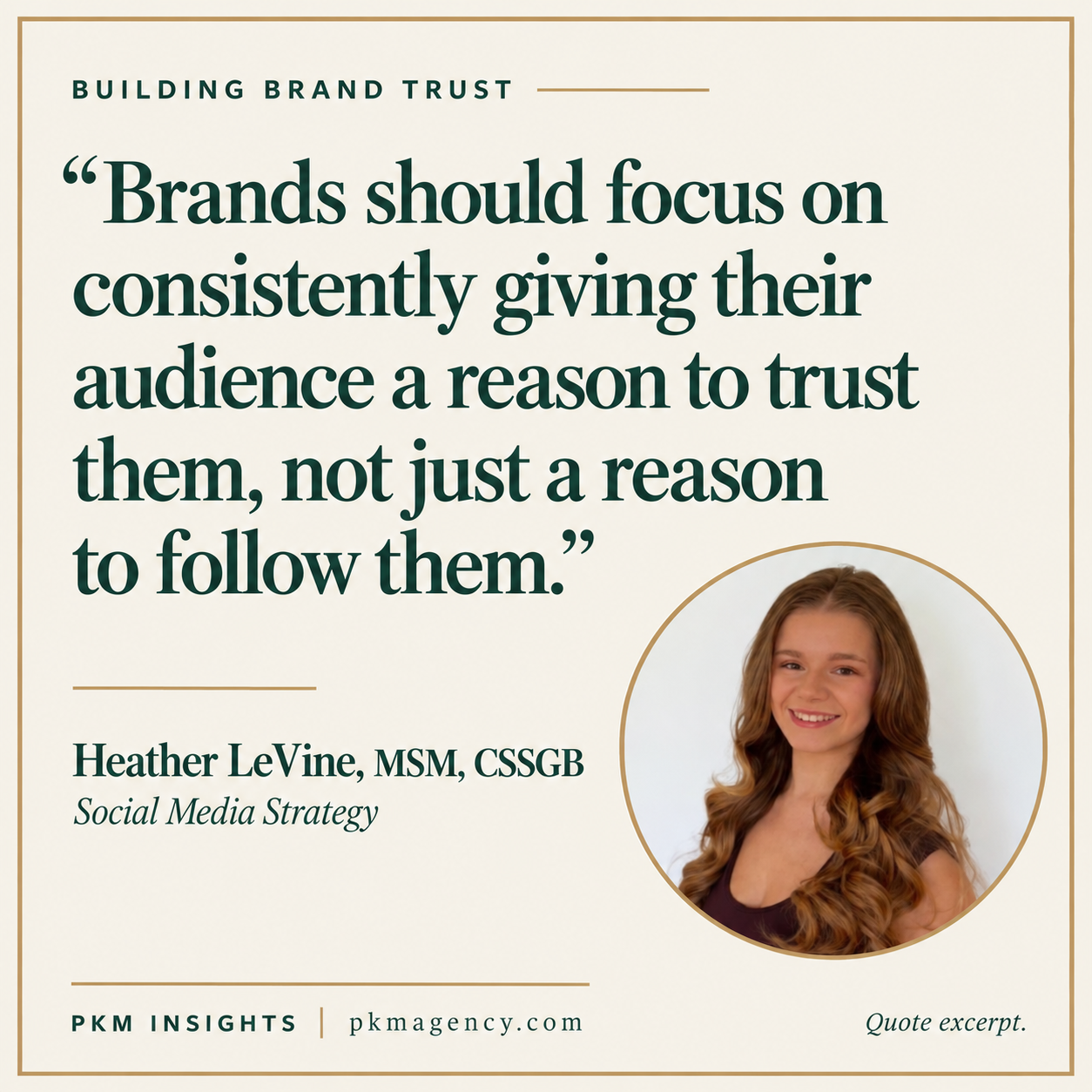
“Brands should focus on consistently giving their audience a reason to trust them, not just a reason to follow them. That can mean answering questions, educating, showing behind the scenes, or simply being transparent instead of making every interaction a sales pitch. Likes and followers can tell you how many people are paying attention, but trust is what makes people remember your brand, come back to it, recommend it, and ultimately buy from it.”Heather LeVine, MSM, CSSGB
Social Media Strategy • FIU MS in Marketing Graduate
Heather’s perspective gives brands a practical way to assess their content. Before publishing, ask what the audience will gain from it. A clear explanation, an honest answer, or a useful demonstration can help someone make a more informed decision. Over time, those interactions can give people a clearer sense of what to expect from the business.
For example, a service business could turn a frequently asked question into a short walkthrough: what happens after someone submits an inquiry, what information they should prepare, and when they can expect a response. This helps a potential customer picture the experience before committing to it. It also gives the business a clear expectation to meet.
I would apply the same thinking to influencer partnerships. Payment alone does not make a recommendation unconvincing to me. The problem is a partnership with no understandable connection between the person, the product, and the audience. A useful collaboration should give the creator room to explain their experience honestly, including who the product might suit and where its limitations are. Clear sponsorship language helps the audience interpret that recommendation.
Keep the promise while adapting the content
Consistency matters here, too. However, I see a difference between maintaining a clear identity and repeating the same content indefinitely. Audiences develop new questions, expectations, and needs. A brand should be able to respond while keeping its central promise recognizable.

“One practical action brands should take is to consistently show up with content that provides value and reinforces who they say they are. Likes and follower counts can signal visibility, but trust is built when audiences repeatedly see a brand deliver useful information, communicate authentically, and follow through on its promises. A smaller, engaged community that trusts your brand is far more valuable than a large audience that simply scrolls past it.”Kerline Jules, M.S., PCM®, CDMP
Founder & CEO, Jules Management Group • FIU MS in Marketing Graduate
Following through is especially important. A brand can describe itself as attentive, helpful, or transparent, but people need opportunities to see those qualities in practice. The content may change as the audience’s needs change; the standard of care behind it should remain dependable.
A useful way to plan for this is to separate the brand’s promise from the format used to communicate it. A business that promises clear, accessible guidance might deliver that promise through a tutorial one week and a question-and-answer post the next. The presentation evolves, while the audience continues to recognize the same helpful approach.
Consistency also becomes visible after a post goes live. If a business invites questions but leaves relevant comments unanswered, there is a gap between its message and its behavior. I would rather see a manageable publishing schedule supported by thoughtful responses than a busy feed the team cannot maintain. Each exchange is another opportunity to demonstrate the care described in the content.
Make customer experiences visible
Customer experiences can make a brand’s promises more concrete. Tina van der Ven connects trust with the evidence a business puts in front of its audience.

“Today’s consumers have a simple standard: show me, don’t tell me. The most practical way for brands to build trust is to let real customer stories, reviews, and results speak for them, because consumers trust evidence over endorsements.”Tina van der Ven
Founder & CEO, vdV Consulting
A detailed customer story can help someone understand what working with a business actually involves. What problem did the customer bring? What did the business do? What changed afterward?
The details make the story useful. They give potential customers something to evaluate against their own needs. Including context and realistic expectations also makes the story more informative than a broad claim that every customer gets an exceptional result.
That means being selective about how testimonials are presented. An enthusiastic sentence can be encouraging, but a story explaining the customer’s starting point and experience gives readers more to work with. Different customer perspectives can also help show the range of needs a business serves. One successful experience should not be presented as a promise that every person will get the same outcome.
The experience behind the result deserves attention as well. Did the customer understand the available options? Were their questions answered? Did they know what would happen next? These details connect Tina’s emphasis on evidence with the everyday interactions through which a brand’s promise becomes tangible.
Show the process behind the promise
Evidence can come from inside the business as well. I find behind-the-scenes content valuable when it reveals the decisions, effort, and standards behind the finished product or service.

“I think brands earn trust when they’re honest about the process, not just the results. Things like showing where your materials actually come from, or admitting what you’re still working on, make people feel like you’re being real with them. Honestly, that’s what makes me trust a brand way more than a big follower count.”Ida Nayeri
Digital Marketing Strategist | Sustainability Marketing & Communication
Ida’s point makes transparency actionable. A business could explain how it selects materials, show how its team checks quality, or acknowledge an area it is improving. These details help audiences understand how the company operates and whether its actions support its claims.
For me, meaningful behind-the-scenes content answers a question the audience might reasonably have. A product business could explain why it selected a particular material. A service team could show how it prepares for a project or checks its work. A polished office tour may introduce the team, but a clear explanation of a relevant decision can tell the audience more about the standards guiding the business.
Acknowledging unfinished work needs the same specificity. A vague statement about doing better tells people little. Explaining the issue, the action being taken, and what customers can expect next gives them something concrete to assess. Transparency becomes more useful when a later update shows whether the business followed through.
Choose trends that fit the brand
The same care should guide decisions about trends. Consider a hypothetical eye-care practice posting a funny video unrelated to vision, patient questions, or its services. The video might attract viewers who enjoy the joke, yet leave them with little understanding of the practice.
Humor can have a place in the brand’s communication. The question is whether the idea helps it connect with the people it hopes to serve and supports the impression it wants to create.

“Social media is one of the communication channels that brands can use. While engaging the target market can be more efficient than other channels, the message of a brand has to be consistent across all the channels. In other words, inconsistent messages delivered to increase engagement on social media are likely to confuse the target audience and hurt the equity of a brand.”Prof. Cem Bahadir
Associate Professor of Marketing, Florida International University
Prof. Cem Bahadir’s observation brings the discussion back to positioning. A social media post contributes to the same brand people encounter on a website, in a consultation, or through customer service. Each interaction should help them form a coherent understanding of the business.
Returning to the hypothetical eye-care practice, the same playful format could introduce what a first visit looks like or answer a common question about choosing frames. The creative idea would then have a clear connection to the service. Viewers could enjoy the content while learning something relevant about the practice and deciding whether to explore it further.
I would judge that choice against the intended audience and next step. A post aimed at local prospective patients should make it easy to understand where the practice is and how to learn about an appointment. A large audience outside that context may still provide exposure, but it does not establish that the post helped the practice reach its business objective.
The next step also needs to match the message. If a post promises a simple, welcoming experience, the linked website should offer clear information and a usable inquiry process. Reviewing that path, from the social post to the website and the response someone receives, can reveal inconsistencies that would be easy to miss by reviewing the post alone.
For brands reviewing their results, this means looking beyond the volume of engagement. Are people asking relevant questions? Do inquiries reflect an understanding of the service? Are customers describing experiences that match what the brand promised? These signals deserve attention alongside reach and follower growth.
I would review those signals together rather than label any single metric a measure of trust. Saves may suggest that someone found a post useful, while a detailed inquiry may suggest interest. Neither proves that the person trusts the business. Customer feedback, recurring questions, and the reasons people give for choosing a brand can add context to the numbers.
A practical review could begin with a small set of recent posts. For each one, identify the audience it was intended to help, the question it answered, the evidence it offered, and the action it invited. Then compare that intention with the responses it received. This gives the team a specific basis for deciding what to clarify, continue, or change.
My concern with visibility-driven marketing is the lasting impression it can leave. Content may be shared, saved, or encountered long after the original campaign. Every post is an opportunity to help someone understand what the brand stands for.
Before chasing the next trend, I would ask one question: Does this content give the right person a credible reason to trust us?